

Walking with Veronica ‘Ronnie' Legg, founder of Vertura
The technical clothing designer who’s putting women first
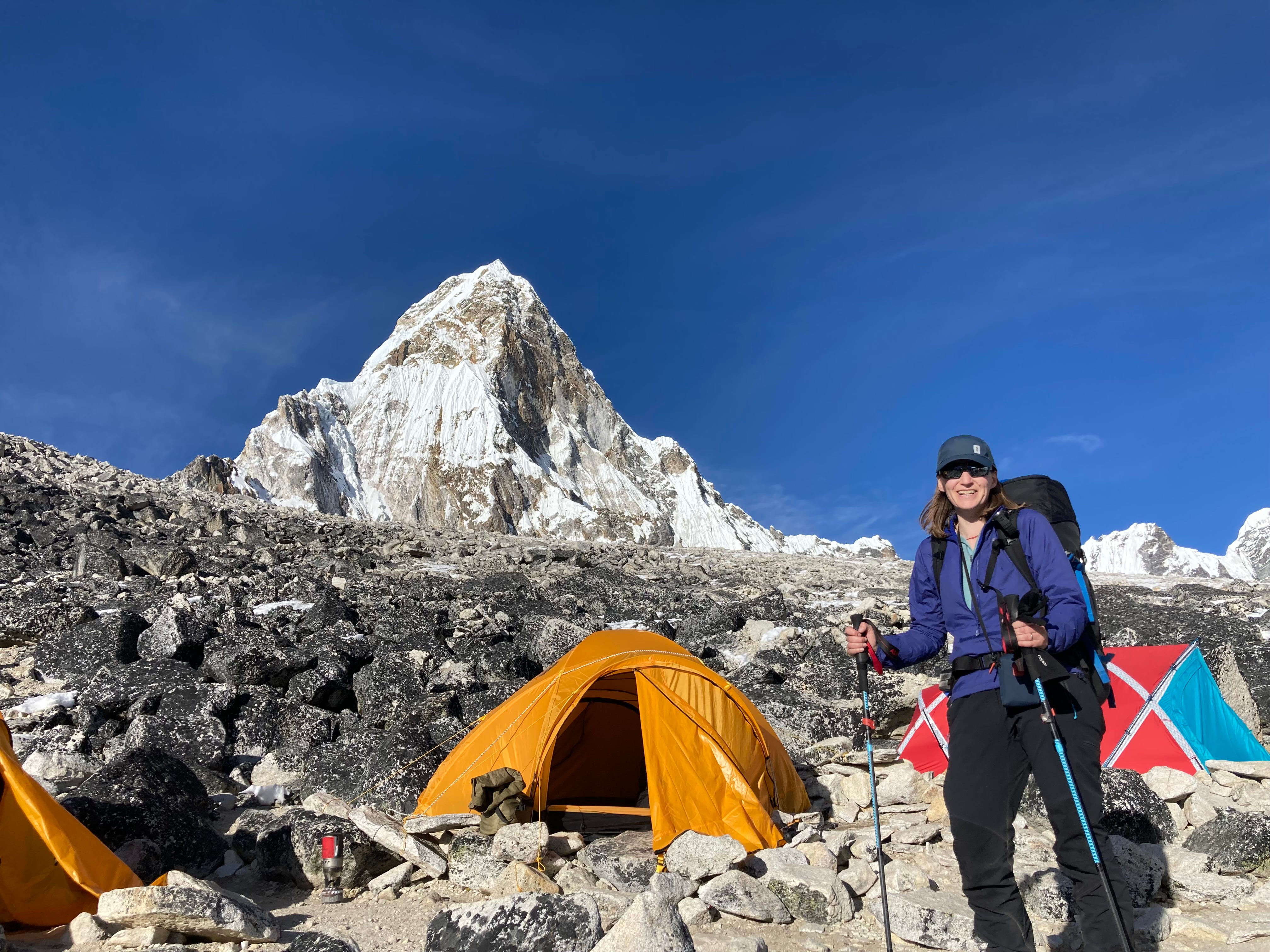
“I believe you need to create a system that prioritises women at every stage, which means not just the design but the business model and company structure itself.”
That’s one of the changes Veronica ‘Ronnie’ Legg thinks needs to happen in the outdoor gear industry to switch the focus of design from men to being more inclusive of women.
Ronnie’s the founder of Vertura, an outdoor clothing brand with gear designed by women, for women. We met at the National Outdoor Expo in 2025 thanks to Rebecca Dawson who tipped me off that there was someone at the show taking a female-first approach to designing outdoor gear for women. Having struggled for years with finding technical gear that fits right and feels great, I headed to the Vertura stand where Ronnie told me a bit about how and why she launched her own brand.
Ronnie’s had an impressive design career. She spent 5 years as a garment designer for Rab before moving to Alpkit where she worked for almost 10 years – starting as a senior designer and moving up the ladder to become the brand’s Head of Clothing Design.
Having held a high position with an outdoor brand I was intrigued by why she’d launched her own clothing brand specifically for women, so I got in touch to ask her about it. I feel I’ve learned so much from our chat and I hope you enjoy it, and feel as inspired by Ronnie’s story, as I do.
Hi Ronnie, please tell our readers about yourself
I was always into the outdoors as a kid, and dabbled in a lot of activities through Scouts and then university. I did everything from sailing to kayaking, hiking to caving – but the one that stuck was climbing. I was pretty academic and enjoyed science at school, but I also loved textiles (although I didn’t feel like I had much of an artistic side). And although I was kind of rubbish at PE, I loved being active and understanding how the body worked – which is what led me to study Sports Science at university. Luckily there was a degree course at Leeds that had an outdoor activities focus, and allowed you to choose modules in textiles and design as they related to clothing and equipment. I found I was most interested in human physiology in extreme environments, and how textiles plays a part in enabling people to survive and perform in those environments.
I would have gone straight on to do a Masters in Sportswear Design, but sadly the course stopped running the year I graduated – so instead I took a job living and working at Plas Y Brenin (the National Mountain Centre). That allowed me to get lot of my outdoor qualifications, and discover what it was like to work as an instructor but ultimately I realised it wasn’t the job for me. I love being outdoors and introducing people to your passion is very rewarding, but the stress of being responsible for other people’s safety day-in, day-out and meeting a new group every couple of hours I found exhausting. North Wales was a fantastic place to live and play though, I made friends for life there and it’s still my favourite place to go rock climbing.
After getting a basic grounding in textiles during my undergraduate degree, I eventually found a Masters course in Clothing Product Development. That touched on aspects of design, fit and sizing, marketing and business – but honestly so much of what I know was learnt on the job itself, and out on the hill using clothing and observing others. It’s a hugely broad vocation, and involves more science, maths, spreadsheets and email than drawing – which often surprises people!
The Masters course led to a job at Rab where I worked for 5 years in the design team before moving on to Alpkit. I spent almost a decade there developing the entire clothing range from what was originally one down jacket and some t-shirts, to a full range covering everything from hiking to biking and even swimming.
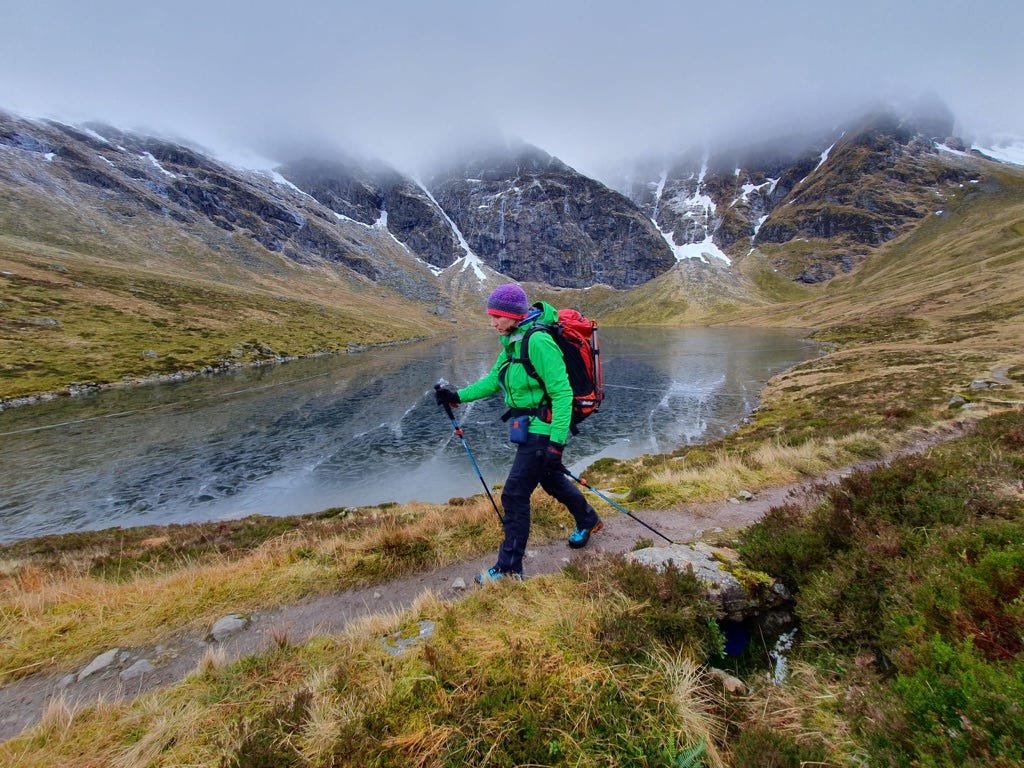
“I spent almost a decade at Alpkit, developing the entire clothing range from what was originally one down jacket and some t-shirts, to a full range covering everything from hiking to biking and even swimming.”
What came first – climbing or designing clothing for climbers?
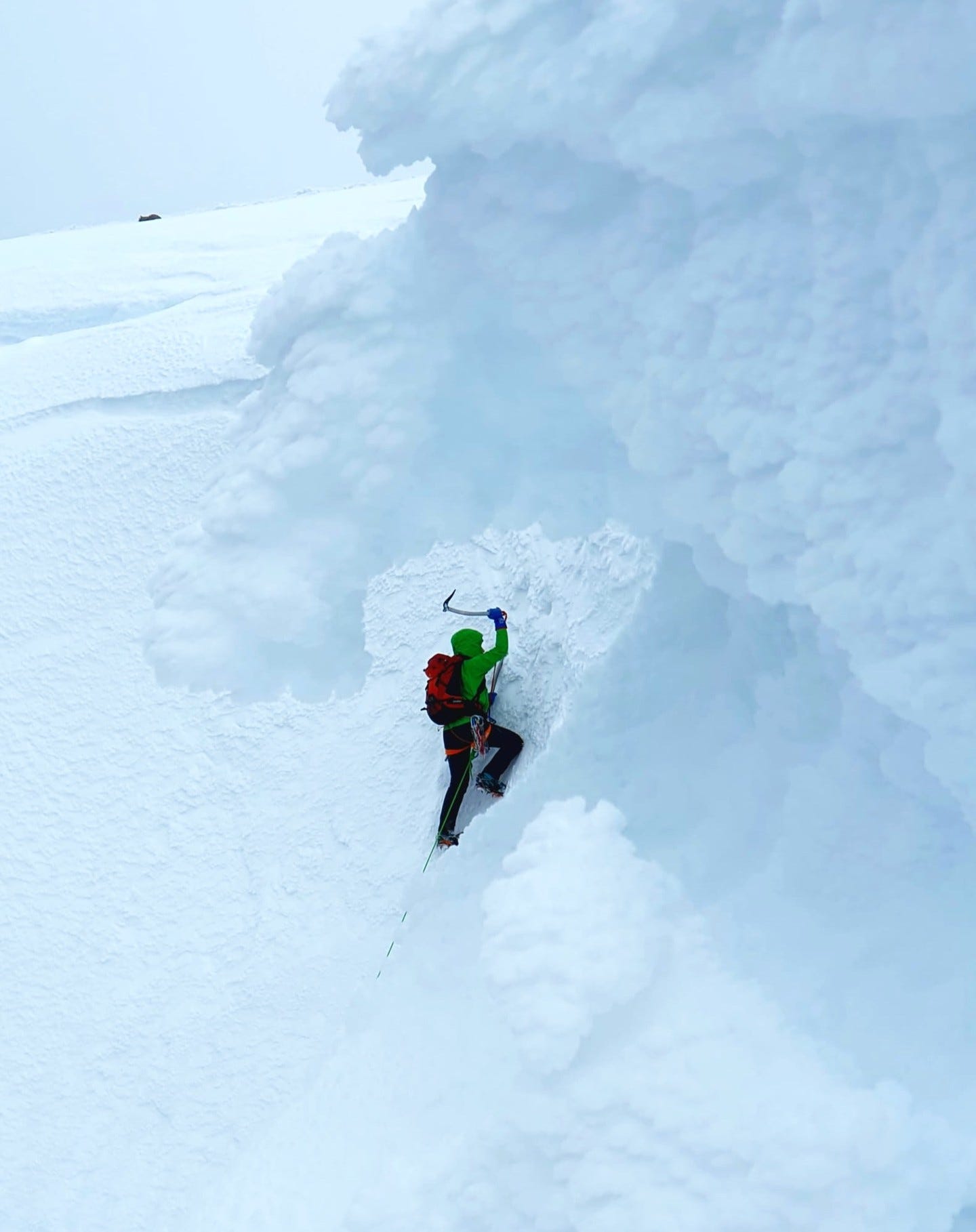
I fell in love with climbing the first time I got on a climbing wall and then those first moments outside on Southern Sandstone. I was totally hooked, but the great thing about it as an activity is how broad it is. I’ve progressed from trad rock climbing outdoors, to winter in Scotland and Canada, then on to bigger mountains in the Alps, the Andes and the Himalayas over the last 20+ years. I have always been obsessed with the clothing and gear involved, spending hours poring over Field and Trek catalogues as a kid, but the design side took a while for me to discover. Not identifying as a naturally creative or artistic person (I can’t draw!) meant I didn’t see Design as an obvious career path. I considered becoming an outdoor instructor, and did that for a little while, but the more I learnt the more I realised that designing outdoor gear was as much a science as it was an art – and it was something I could do.
You’ve been designing outdoor clothing for over 15 years. Can you tell me about the most challenging, unusual and fun things you’ve worked on?
The most challenging thing to design from a technical perspective was one of the last pieces I worked on at Rab, which was a waterproof down jacket using a bonded baffle construction to reduce weight and eliminate excess fabric. It was a new way of making something so it took a lot of figuring out compatibility between different materials, the order of make and the impact it had on production processes – all of which had to be communicated to the factory responsible for making it. I’m pleased to say it worked and the product is still in the range today, while the construction technique has been applied to more and more styles.
The most unusual – or rather, the thing I never expected to be designing, was swimwear. It’s quite different to a lot of outdoor design, as you’re intentionally going to get wet in it! And it’s basically underwear, so it comes with a different set of challenges.
It’s hard to pick what was the most fun, as I enjoy the variety of different types of products I’ve worked on over the years (and there have been so many!).
“I was most interested in human physiology in extreme environments, and how textiles plays a part in enabling people to survive and perform in those environments.”
When did you first notice a problem with outdoor gear aimed at women? And what were your frustrations?
It was apparent to me from the start that the choice of options for women was much more limited than it was for men. In my early years hiking with Scouts I was wearing men’s clothing; army surplus trousers that would fall down, a men’s Helly Hansen baselayer and my brother’s waterproof jacket. That worked ok (although everything was a bit big!) until I hit puberty and started getting curves. Then I realised I needed women’s fitted styles, but half of the things I wanted only came in men’s – or they had less features, or were less practical in some way. It has got better over the years, but there is still a disparity of choice when you look at the more technical options.
With so many women not just getting outdoors, but leading the way these days, why is it still so hard for us to find gear that works for us?
The thing that people don’t realise is how much of the industry is dictated by men. They are the gate keepers and decision makers at the top of the vast majority of companies; middle management may have more women involved, but there are very few companies with more than a handful of women at Director level or above. That matters, not because those men don’t care what women think, but because they are blind to their own biases. It’s been proven in extensive research that companies with more diverse leadership teams (and that can be in age, gender, sexual orientation or race) are more innovative and more successful in the long run, because they are better at problem solving.
The issue has always been that women’s styles sell fewer than men’s, and are therefore seen as less commercial. But that’s because they’ve been created in a business structure designed for and by men, which impacts the product range and marketing output. Lack of diversity means this ‘problem’ isn’t seen as an opportunity to really listen to what women want and respond to that through product and marketing, but is reduced to looking at the bottom line of figures on a spreadsheet. It is possible to avoid these pitfalls but I believe you need to create a system that prioritises women at every stage, which means not just the design but the business model and company structure itself.
Designing a product is the easy bit: getting permission to design it is the first barrier, and then actually getting it made is the next. There are many more along the way which might prevent that product ever reaching the woman who would really appreciate it. Most of those barriers are gates which have to be held open by men for you to get anywhere. I got sick of there always being another gate to push through, so I decided to take another approach and try and build a business that has engineered out as many of those barriers as possible from the get-go.
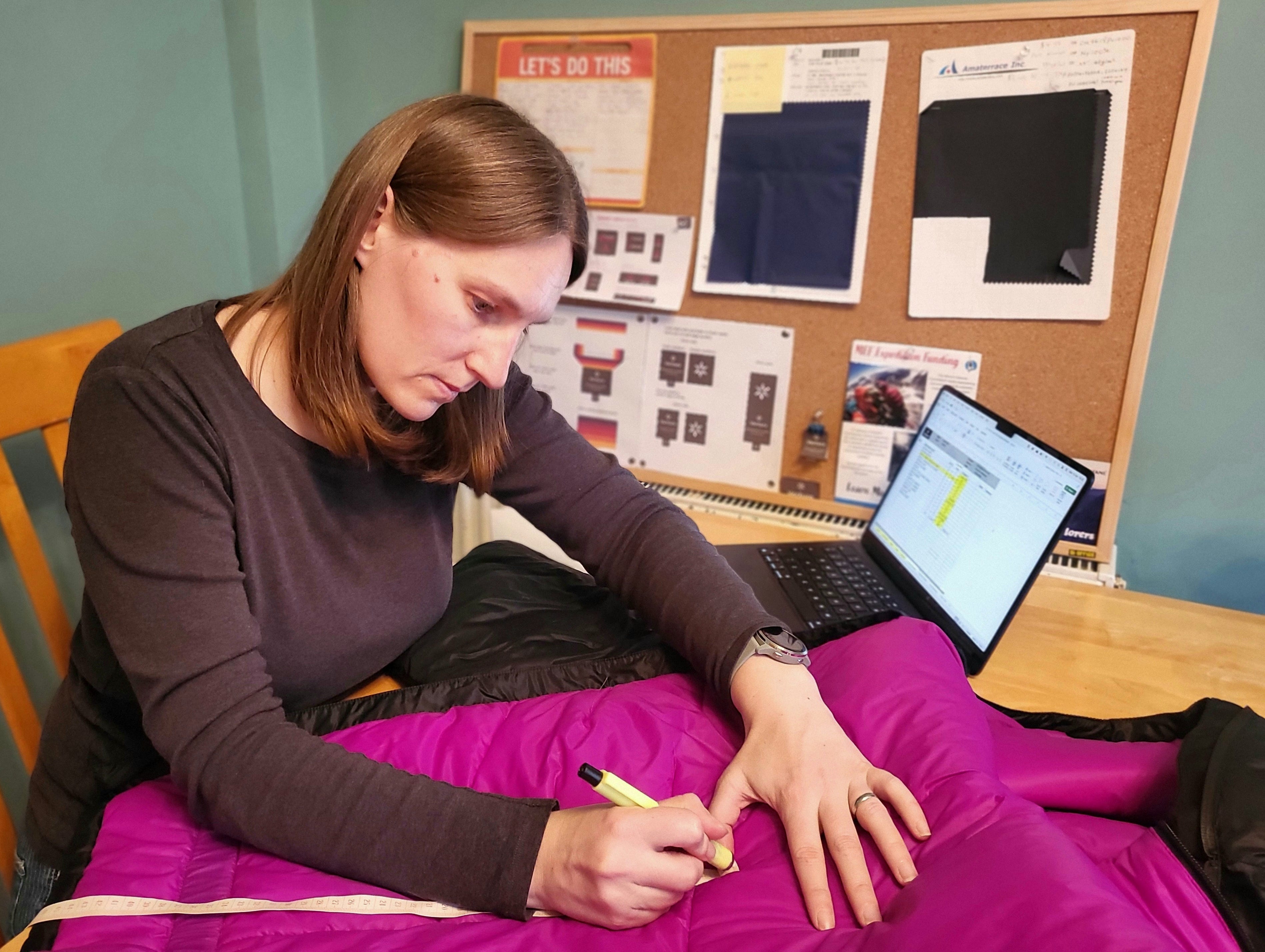
“There are many barriers which might prevent a product ever reaching the woman who would really appreciate it. Most of those are gates which have to be held open by men for you to get anywhere. I got sick of there always being another gate to push through, so I decided to build a business that has engineered out as many of those barriers as possible from the get-go.”
What other things contribute to the male-centric design focus, such as the training, research or a lack of female champions within the industry itself?
There is very little academic ‘training’ in outdoor gear design available. Some people come from fashion design which is often streamed into menswear or womenswear, but not from a functional perspective – it’s more style and convention based, which then bleeds through into outdoor design. That’s not to say that’s always a bad thing, but sometimes it can lead to compromises in functionality.
The male-centric bias issue is more insidious than that (if you haven’t read it, Invisible Women by Caroline Crialdo Perez explains how the gap in data has led to a world designed in a way that disadvantages women at every turn).
It’s vital that we start from women’s needs, using data that is taken from female populations, and applying it to the problems that real women face in the outdoors. So rather than saying ‘make a waterproof trouser in women’s sizing for walking that costs £X, that we can sell at least 500 of – oh and it has to be in black because it needs to use the same fabric as the men’s version’, starting from first principles and making what women want and need (not what men think will sell to women because they have no other choice!).
We also need to challenge the idea that ‘not enough women do that’ is a valid reason to not serve those women. We might be a smaller slice of the market, but it is growing and the more women discover the outdoors, and are comfortable in their outdoor clothing, the more role models that creates and that has an upward spiral effect.
“In my early years hiking with Scouts I was wearing men’s clothing; army surplus trousers that would fall down, a men’s Helly Hansen baselayer and my brother’s waterproof jacket.”
How important is it to use the right gear for the activity you’re doing, including the way it fits and feels?
My stint working at Plas Y Brenin and as a leader on expedition to Svalbard definitely hammered home the need for durability in clothing that you rely on for your safety.
The difference between ill-fitting or poorly performing clothing, and the right fit and functionality can be as severe as life or death in extreme cases. It’s entirely possible to catch your crampon on excess material around the ankle of your trousers and end up in a crumpled heap at the bottom of a slope. It might seem innocuous, but in high consequence situations these little things can make a huge difference. Or take the thermal insulating properties of a jacket that someone relies on to keep them from getting hypothermia; fit affects how much warm air is trapped, and could make the difference between an uncomfortable experience and ending up in hospital.
At a less extreme level is simply the fact that if you are more comfortable you have more fun! That’s really important when people are first starting out in the outdoors, because if they have a good experience and enjoy themselves they are likely to do it again. If they have a miserable time because they got cold and wet, or because they felt self-conscious in the trousers that don’t fit their body shape, then they are less likely to want to repeat the experience. It can literally make the difference between someone developing a life-long healthy habit of exercising outdoors, or never wanting to leave a city again.
“The difference between ill-fitting or poorly performing clothing, and the right fit and functionality can be as severe as life or death in extreme cases.”
What gear needs are unique to women and where are the mistakes most outdoor brands make with this?
Fit is a huge part of this. Women are so much more varied in shape (particularly with hip to waist ratios) that we need more options to choose from (not less!). Making the same model of trousers in several different fit options (not just sizes) is one thing that is often overlooked. It’s not easy for small brands, but the bigger ones could be doing this and a lot aren’t. Building adaptability into clothing using stretch and elastic can also help as many women experience fluctuations in our weight and shape over the course of a month (and the years!).
The second biggest issue is clothing that facilitates going to the toilet outdoors, particularly when it comes to layers in winter. It’s seen as a bit taboo, or just not really thought through properly at the design stage, or it ‘costs too much’ to solve – when it’s a problem every single woman has every time they go out for a long day.
Third is pocket placement and functionality. Our shape affects what works, what is comfortable and what is accessible – and it is different according to our different shapes. Again, this often isn’t well considered, or deemed too difficult to solve or not important to women so the pocket gets left off entirely!
“We need more diversity across the board – not just one type of woman, but women of different ages, sizes and shapes, race and background that reflect real people in the outdoors.”
What advice can you give women when it comes to choosing gear in terms of function and fit?
You have to feel comfortable. That means physically and psychologically. If you don’t feel confident in what you are wearing, it can impact your mood and that affects your enjoyment. If you find leggings comfortable and you like wearing them, go for it. But if you prefer not to be so on show, choose legwear that fits you well and won’t ride down during the course of the day or rub under a rucksack. Just make sure you’re choosing fabrics that are appropriate – avoid cotton as it holds onto moisture and gets really cold when damp.
Choose clothing that will protect you from the weather and keep you comfortable, whether that’s a waterproof to keep the rain out, or enough layers to keep you warm (and that you can take off to cool yourself down). Consider how all your layers work together: do they fit over the top of each other in the order you want to wear them? Can you ventilate to cool down without swapping out layers?
Check key areas for places that interact with your rucksack if you are carrying one, so avoid seams or fastenings that might rub under your hip belt or shoulder straps.
Think about how you like to organise things: are you a person who wants their phone handy in a pocket at all times? If so, make sure the layers you wear allow for that. Do you really keep a folded map in your jacket pocket, or wear a helmet under your waterproof? Look for features that serve your needs, not just because a (male) magazine reviewer said you need them.
Remember you are an individual, and what works for you might not work for someone else. So experiment and find what works for you – and have fun doing it!
“Consider how all your layers work together: do they fit over the top of each other in the order you want to wear them? Can you ventilate to cool down without swapping out layers?”
I’ve noticed how some outdoor brands lean more towards the style, fashion or look of their clothing and it feels like the technical aspects are secondary. How important is style and fashion when it comes to outdoor gear?
Many people like to think they aren’t influenced by style or fashion, but if you take a look at yourself or a catalogue from 20 years ago you will see that’s not the case. Outdoor clothing design does evolve alongside fashion trends, although there’s usually a lag of several years. (Trouser fit is a good example – skinny jeans influenced how tight fitting outdoor legwear became popular in the 2010’s, and it is heading back the other way now that wide leg cuts have come back into fashion).
What is important is that function is considered where it is the primary concern: baggy wide leg trousers might be great for functional movement while bouldering, but would be inappropriate for mountaineering trousers. One aspect of fashion that doesn’t have too much negative impact on function is colour, although it could be argued having a bright visible colour jacket is safer if you get into trouble compared to a black or beige jacket.
The current Gorpcore / Athleisure trends are almost working the other way round, with outdoor influencing fashion. That’s no bad thing: with more younger people getting into the outdoors, it’s important that they are prepared for the weather, so better that they are wearing clothing that has a chance of protecting them from the elements. Although don’t get me started on the cropped waterproof or down jacket styles out there…!
“Outdoor clothing design does evolve alongside fashion trends, although there’s usually a lag of several years.”
There are loads of outdoor influencers, often ambassadors of clothing and gear brands. Who do you think is missing from the story when it comes to gear specifically designed for women?
It is slowly getting better, but there has been too much of a focus on women who are young, white and conventionally attractive. We need more diversity across the board – not just one type of woman, but women of different ages, sizes and shapes, race and background that reflect real people in the outdoors.
As a designer your work is both technical and creative. How do your own outdoor adventures, like climbing or walking, play a role in the creative aspect of your design work?
I’m always thinking about design, especially if I’m out walking or climbing. It can be a creative inspiration like the colours, textures or patterns I see out in nature, or a more technical issue around temperature regulation or zip placement. I’m always looking at what people are wearing, talking to the people I’m out with and storing up a bank of ideas for later. I find being active outdoors can also unlock a problem that I’ve been struggling with, by helping me think differently (or by letting my subconscious work on it while I figure out the next move).
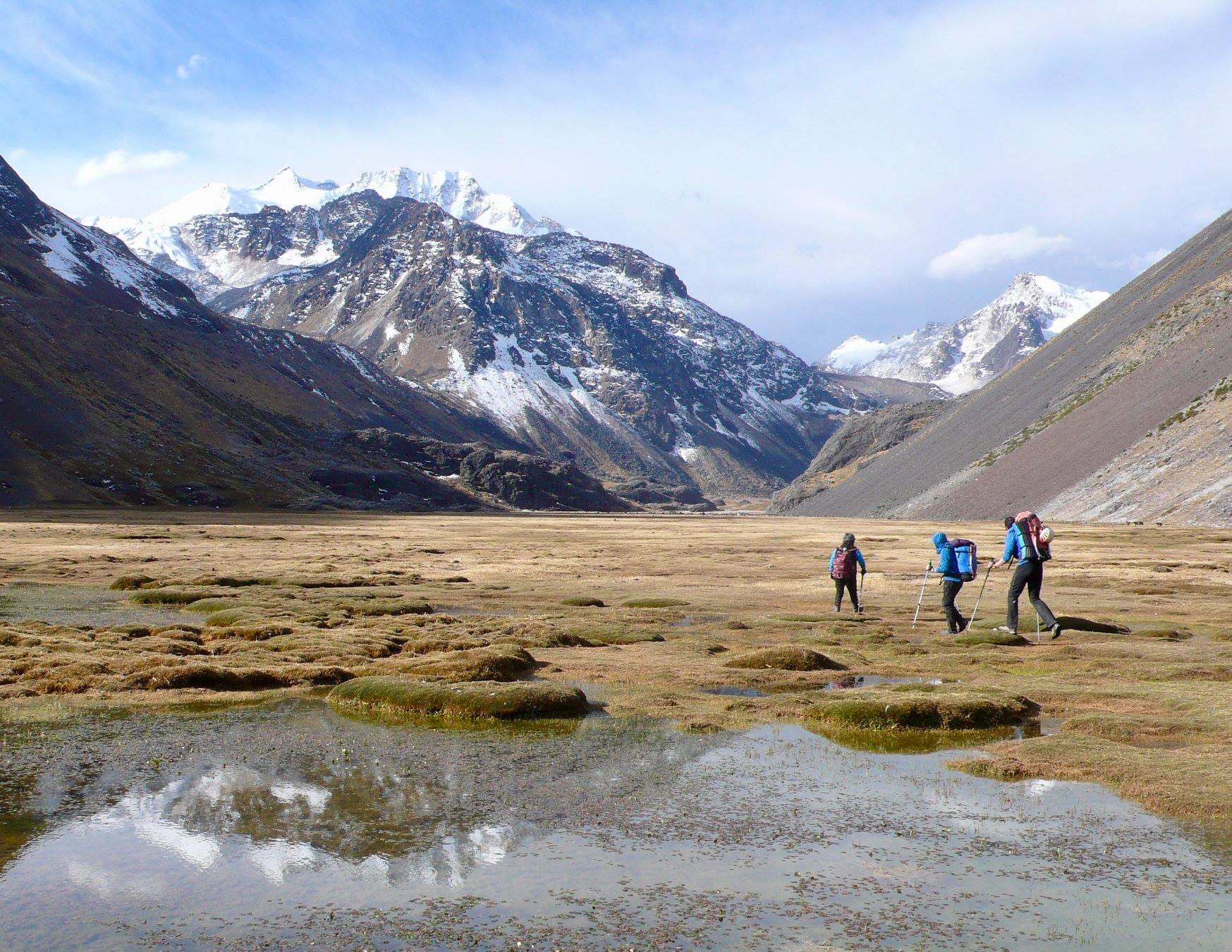
“So much of what I know was learnt on the job itself, and out on the hill using clothing and observing others. It’s a hugely broad vocation, and involves more science, maths, spreadsheets and email than drawing – which often surprises people!”
What’s your walking style?
Happy Hiker
Reluctant Rambler
Sunday Stroller
Wild Weekender
Wild Weekender.
Headphones or head in the clouds?
Mostly head in the clouds, unless I’m doing a repetitive training hike somewhere I’ve been loads of times before – in which case I need a podcast to distract me from clock watching or the sound of my own breathing.
What’s the most memorable walk you’ve ever done?
This is a hard one, as there have been so many. I’d probably have to say the approach to Ama Dablam up the Khumbu valley above Namche Bazaar. It’s such a spectacular region, and obviously because it’s on the route to Everest Basecamp it’s a trail that has so much meaning to so many people. It’s so varied too, from the dusty trail to the Rhododendron forests, to the pray flags and suspensions bridges, the temple gongs and juniper bush fires, and the views of countless summits over 6000m high. It’s somewhere I’d recommend anyone went at least once, even if you’re not a climber.
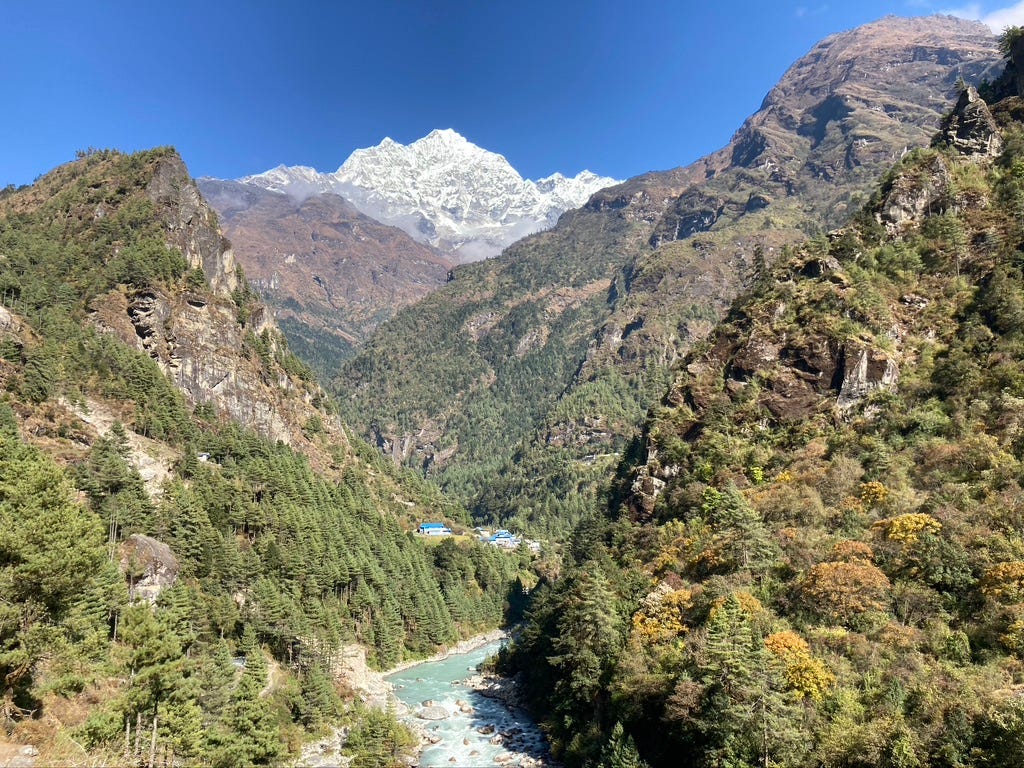
If you could take a walk with anyone, real or fictional, alive or gone, who would it be? And why?
Julie Tullis – she died on K2 in 1986 but it was her book Clouds from Both Sides that inspired me to get into mountaineering, and her son was the first person to take me rock climbing outdoors.
One word round
One thing you always take with you on a walk?
SnacksOne word to describe how you feel about design?
ExcitedOne word to describe how it felt to launch Vertura?
Liberating
Finally, please can you share a walking- or climbing-inspired reflection for our readers?
You are always capable of more than you think.
“I find being active outdoors can also unlock a problem that I’ve been struggling with, by helping me think differently (or by letting my subconscious work on it while I figure out the next move).”
Ronnie, this has been so inspiring. Thanks for talking so openly and generously about Vertura and your passion for climbing and the outdoors.
If you’d like to see Ronnie’s range of thermal legwear and accessories (the wrist warmers are fab!), visit the Vertura website, follow on Instagram or head to the National Outdoor Expo on 21-22 March where she’ll have a stand.
Happy walking and writing until next time.
Sarah and Ronnie
More from The Writer’s Walk
If you enjoyed reading Ronnie’s story, take a look at my interview with Rebecca Dawson, founder of Vampire Outdoors, former Chair of Trustees at the Ramblers, and plus size outdoor gear champion who’s helping every body get outdoors.
