

Walking with Olivia Sprinkel, author
The nature writer and photographer on connecting with nature and the power of listening
“It is our separation from nature which is the root cause of climate change, and there is an urgent need to heal this separation.”
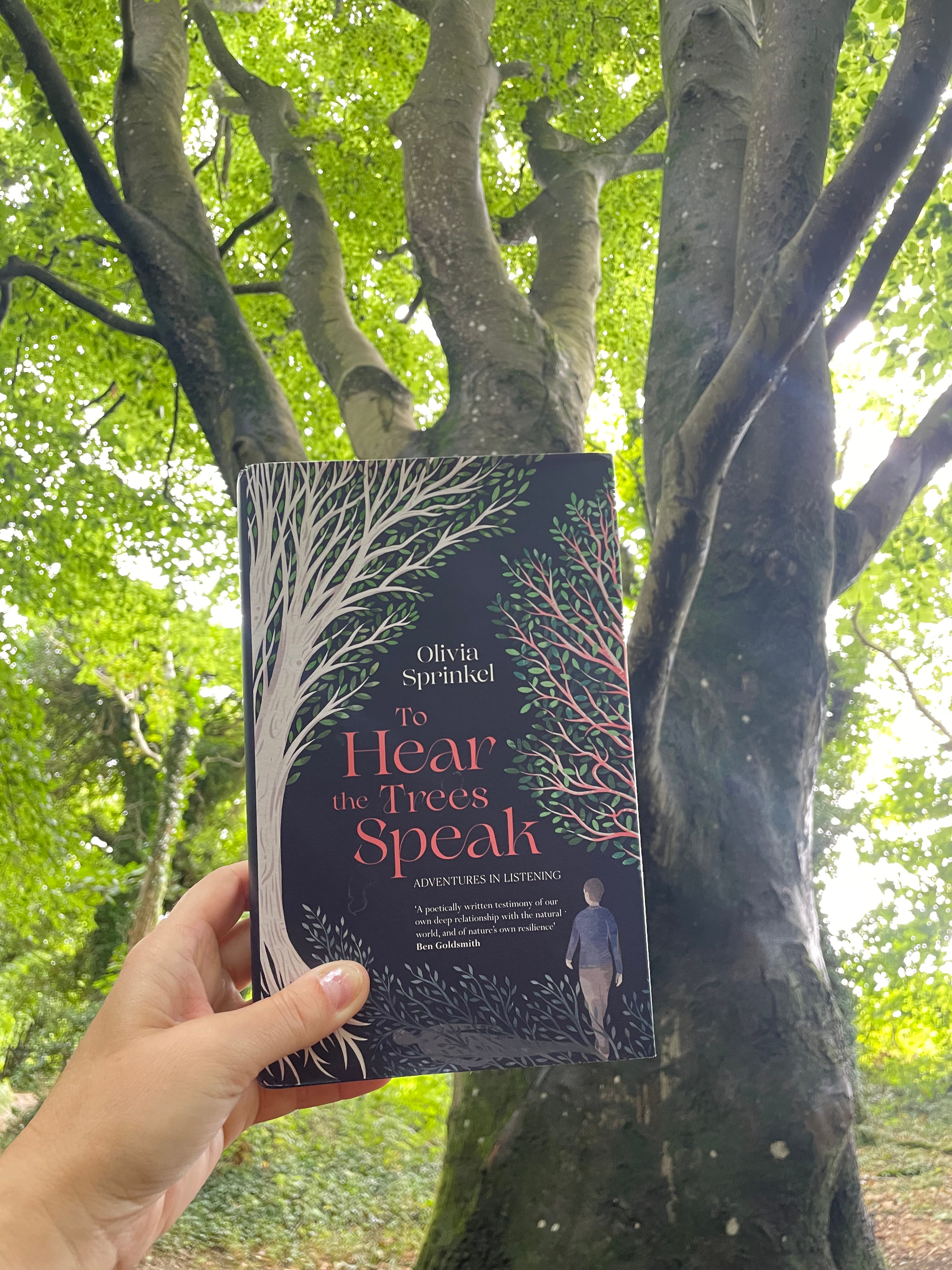
These words are from Olivia Sprinkel – a nature writer, photographer, sustainability consultant and nature connection guide whose work is focused on the natural world and our connection to it. And she shares some of her experiences of connecting with nature in her book, To Hear The Trees Speak. It’s a beautiful account of the lessons she learned from listening to ten trees on five continents.
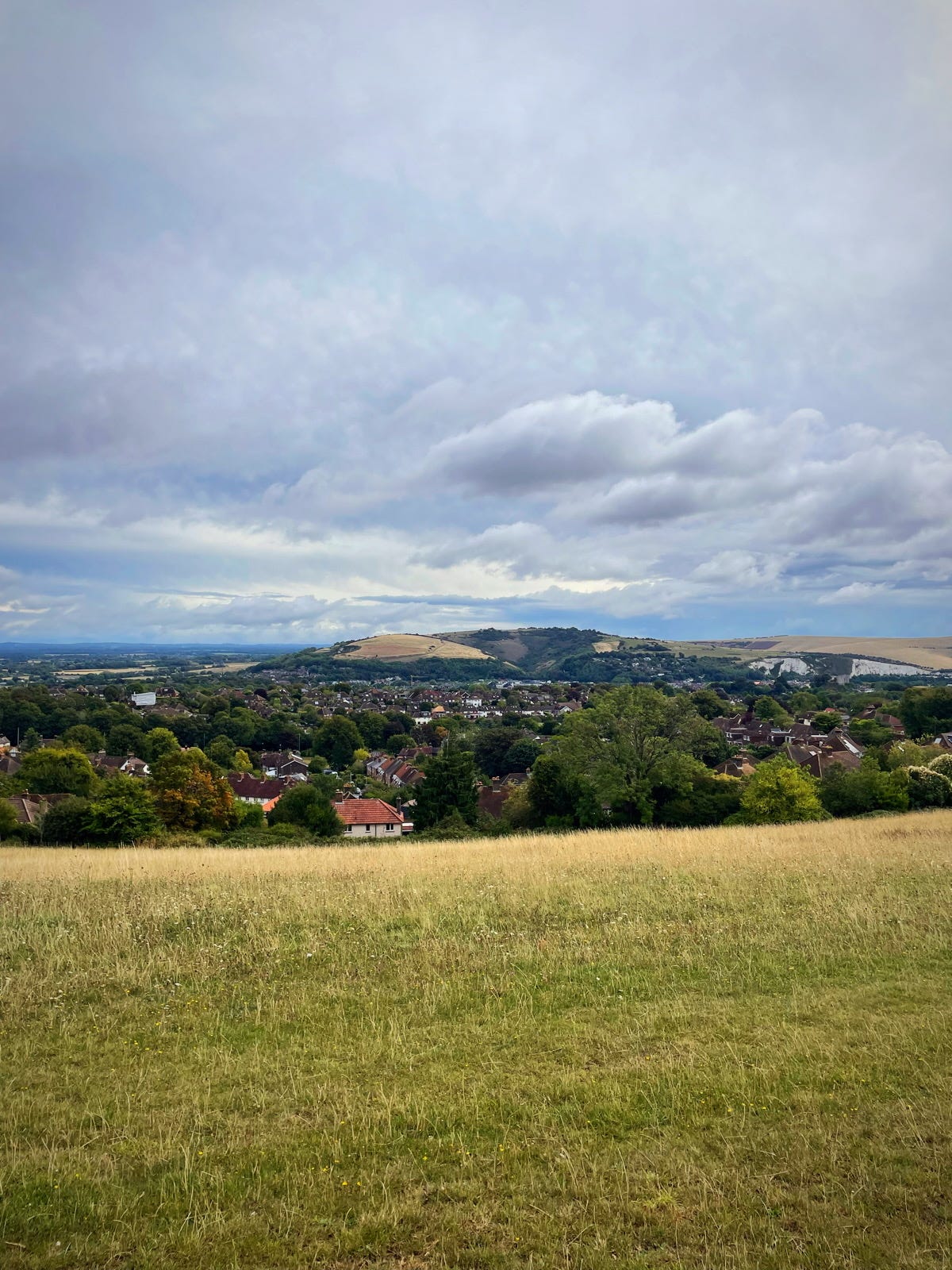
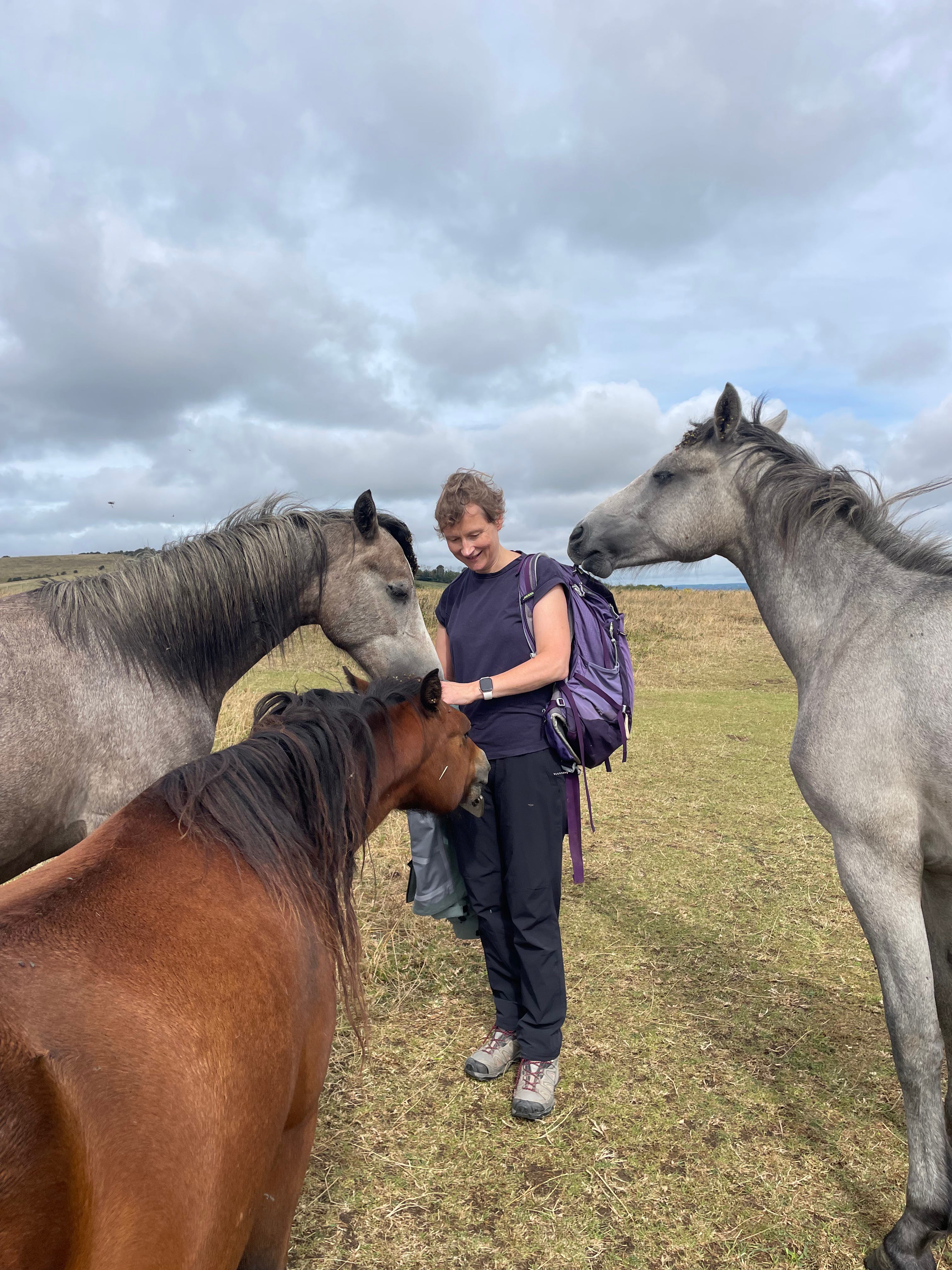
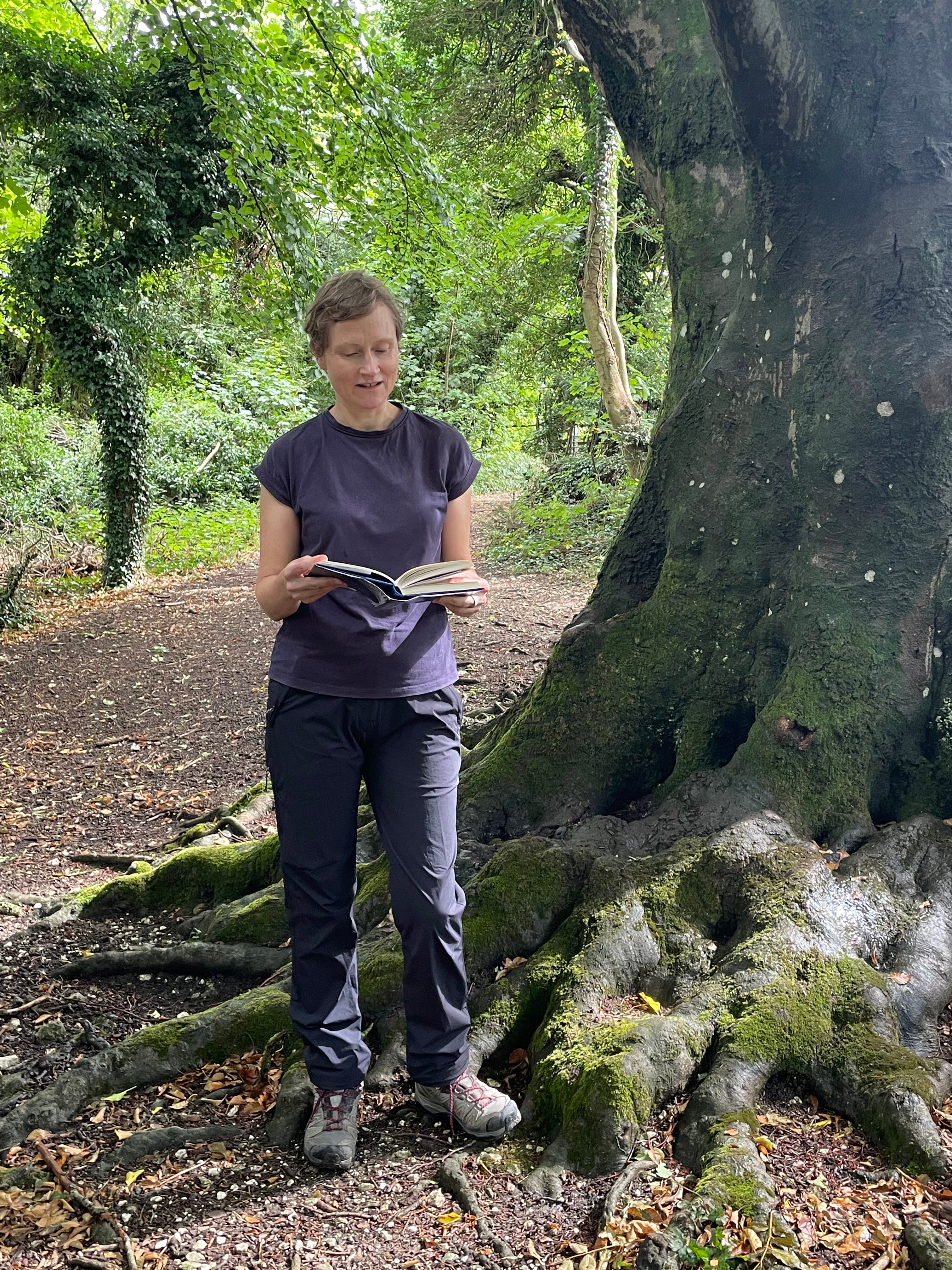
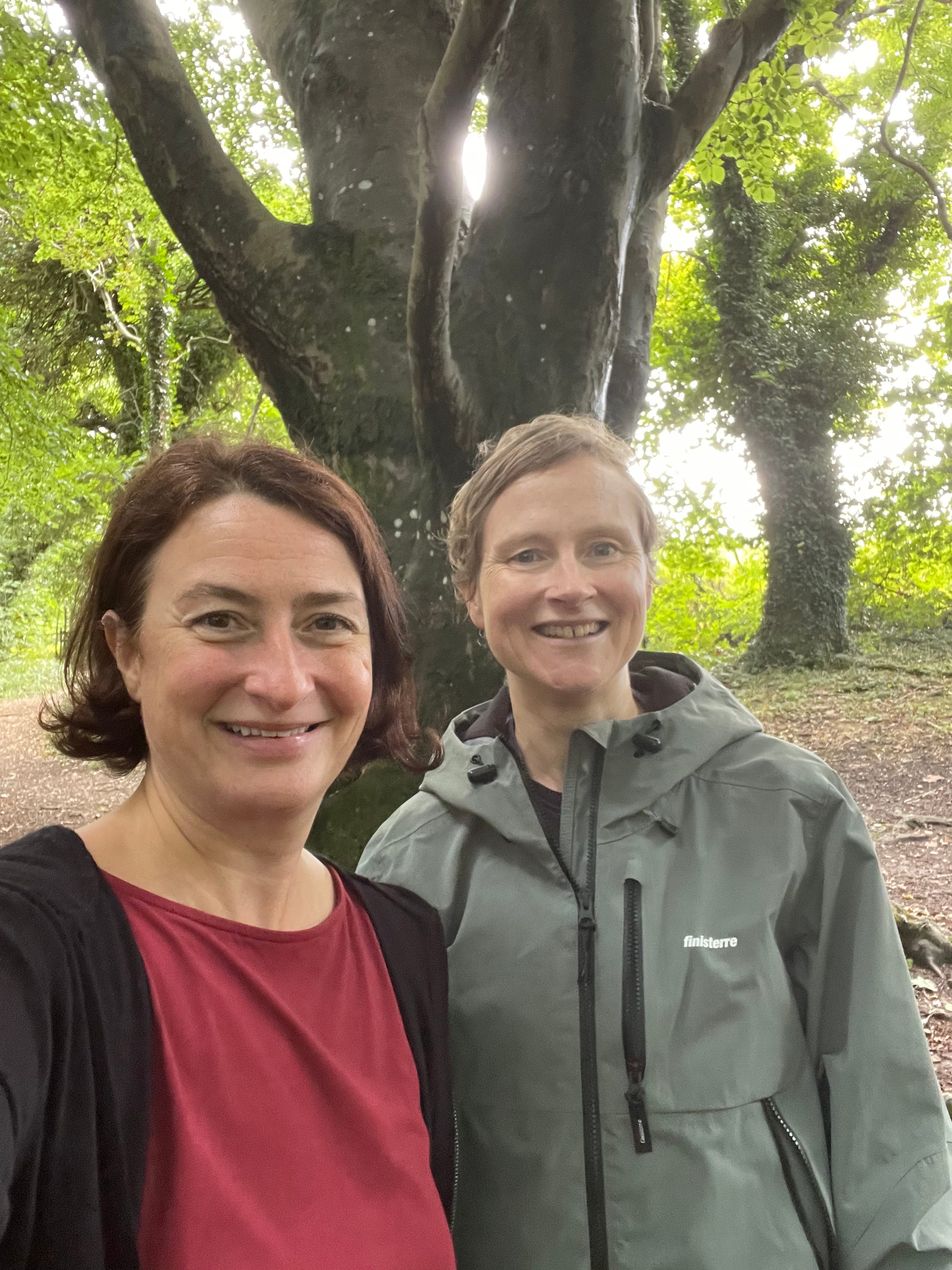
Olivia took the time to share one of her local walks in the South Downs with me, where she introduced me to the tenth tree from her book, a grand old beech tree that lives in a small wooded area outside of Lewes. As we walked, we enjoyed the views, met some four-legged locals, and talked about nature and the importance of listening to it. We hope you enjoy reading our interview.
Hi Olivia, please tell us a bit about yourself: where you live, your work in sustainability and how you got there.
Hello! I live in Lewes, East Sussex, on the South Downs. Alongside my writing, I am a sustainability strategy and communications consultant. I’ve been working in sustainability since 2008 – when it was not yet called sustainability! Before then, I’d been working in employee engagement and my first sustainability role was on engaging employees with climate change.
To Hear The Trees Speak, is a personal account of your journey around the world to meet ten trees so you could listen to, and learn from, them. What inspired you to travel around the world to meet ten trees?
The book was the result of hearing a call from the trees. I was working in New York at the time. One June morning in 2018, I read a headline in a newsletter about how the baobab trees in Africa were dying because of climate change. I had lived in Malawi for a year when I was 17-18 years old. I knew the baobab trees, these giant trees that are designed to withstand times of drought. It filled my heart with grief that they were dying. If these trees that had lived so long were dying, it really brought home to me the impact of climate change on the natural world. It made me wonder what collectively we were doing, and what was I doing?
I thought about the trees all day and that evening when I went home to my apartment, I pulled a new notebook from a shelf. I wrote down the original working title of the book, ‘A History of the Future in 10 Trees’. I noted down some of the trees that I wanted to visit and learn from, before it was too late. It felt like such a clear call from the trees, that this was something that I needed to do, it was a now or never moment. I was in a position where I wasn’t in a relationship, I didn’t have dependants. I could give up my job and go to travel to the trees.
“I read a headline in a newsletter about how the baobab trees in Africa were dying because of climate change. If these trees that had lived so long were dying, it really brought home to me the impact of climate change on the natural world.”
The trees you visited each have a specific story or significance, with some being quite famous. How did you choose the ones you met?
There was a mix of reasons. I chose some of the trees as they had a particular history. For example the Jaya Sri Maha Bodhi tree in Sri Lanka is the oldest tree recorded to have been planted by humans, over 2000 years ago. I thought that a tree with such a long relationship with humans would be one to learn from. The Vernon Oak in Sheffield was one of the trees saved by the tree protectors when the city had targeted 17,500 trees to be cut down. I wanted to include an urban tree because of the importance of trees in our cities. Others were not specific trees, but species of trees, some of which had a personal significance to me, such as the birch tree in Finland, where my mother is from. The giant sequoias are trees which are being affected by the intensification of wildfires caused by climate change. And some of the trees chose me, such as the olive tree in the south in France and the beech tree outside Lewes, which became my lockdown tree.
When you visited the Jaya Sri Maha Bodhi tree you were unable to see it properly or touch it because it’s protected by a wall. How did it feel to visit a tree and not be able to connect with it physically?
It was the tree that I felt least connected with, probably because of this physical separation. The tree is a sacred pilgrimage site for Buddhists and I also experienced feeling that the prayers that people were offering there were not part of my tradition – and the feeling of lack in not having my own tradition. But then visiting the Botanical Gardens in Kandy, I realised that this is my temple, that the trees can be sacred to me, wherever I am.
In Ecuador’s Amazon you used a microphone to listen to the trees. How did it feel the first time you heard water running up the roots and into the tree?
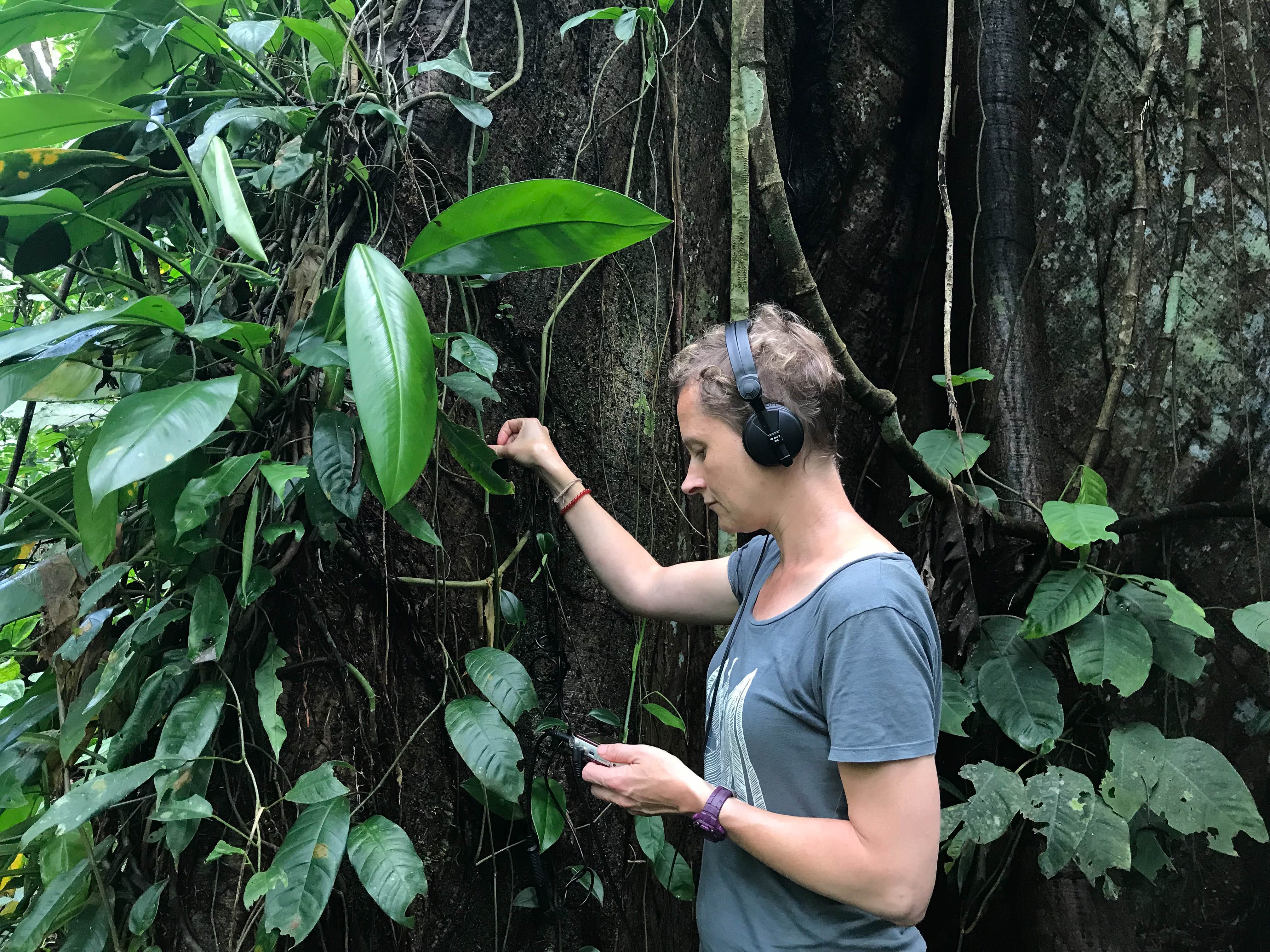
It was such an amazing feeling, full of awe and wonder. Rationally, we know that water is transported from roots up the trunk of the tree, but to actually hear it was ‘wow’. It was even more special, as we had tried listening to a number of different trees without success. Then I had a moment of intuition to try this particular tree, and when it worked, it was a Eureka moment.
“As I began to write the book, I realised that I needed to tell the story of my journey to the trees, and therefore needed to include some of my background as well.”
Did you practice walking meditation during your time with the trees? If so, what did you gain from that practice?
I didn’t consciously label it as walking meditation, but I definitely practiced mindful walking. That was a key part of my practice – walking slowly and using all my senses. I heard the walking artist Hamish Fulton speak recently, and he said that ‘Walking is the best way I know to be influenced by nature’, and I would agree with that. Walking mindfully connects us physically with the earth and opens us up to the world.
What’s the most significant thing you learned from your time with the trees?
The importance of slowing down and paying attention to trees and the natural world. Trees and plants have so much to teach us if only we take time to listen. And it is our separation from nature which is the root cause of climate change, and there is an urgent need to heal this separation.
Did you always intend to write a book about this experience or did the idea form later?
The idea to visit the trees came as the idea for a book. I wanted to tell a different story about climate change, one which put trees at the centre of the story. As I began to write the book, I realised that I needed to tell the story of my journey to the trees, and therefore needed to include some of my background as well. I think this helps it to stand out from other books about trees – readers have told me that it was the personal story that provided a strong narrative thread, and that while they wouldn’t have read a book of tree facts, they enjoyed learning about the trees through my journey.
“Walking mindfully connects us physically with the earth and opens us up to the world.”
You quote the storyteller, Martin Shaw, (p29) who says “We don’t need new stories, we need to go back to the old ones.” If our readers were in search of an old story – a folklore – to connect with, which one would you recommend?
It’s difficult to pick out just one as there are so many! If this is something that interests readers, I would recommend the books of Martin Shaw or Sharon Blackie as a starting point. And going to hear a storyteller if possible – there is something about hearing a story, in community, rather than reading it. There is so much wisdom in the old stories about how to live. One of the recommendations that Martin Shaw makes is to listen out for the image from the story that really resonates with you. It will be different for each of us.
In the book, I mention the Kalevala, which is the Finnish national epic, and it shows how nature was an integral part of the Finnish way of life. The hero says at the end, ‘Nature was my greatest teacher.’ I was lucky enough to attend a session recently hosted by an Indian storyteller, Sowmya Srinivasan. One of the stories was about a girl who could turn into a tree, and it so well illustrated the greed that people show towards the natural world, and the importance of taking care of it.
“I wanted to tell a different story about climate change, one which put trees at the centre of the story.”
Other than your own, what’s your favourite book on trees?
The Overstory by Richard Powers is my favourite tree book, and possibly favourite book ever. It is an epic of a novel, spanning human and tree generations, and takes us into a world where the trees are central characters.
What’s your walking style – or invent your own if none of these float your boat!
Happy Hiker
Reluctant Rambler
Sunday Stroller
Wild Weekender
Mindful Moseyer! I definitely enjoy taking my time and stop to take photographs and make notes. I’m also sometimes a Haiku Hiker, writing haiku as I walk!
Headphones or head in the clouds?
I now mostly walk without headphones so that I can pay attention better and listen to the sounds around me, to allow space for processing thoughts or ideas, as well as connect with the land.
“I’ve been taking a picture a day since 1 August 2016 and most of these have been taken whilst walking.”
What’s the most memorable walk you’ve ever done?
Oh, that’s a difficult question! I walked the first 10 days of the South West Coast path on my own at a difficult time in my life. It is such a beautiful walk, and I was walking in May when all the hawthorns were in blossom. I’d love to do another long distance walk like that. There’s something about being on the road day after day.
If you could take a walk with anyone, real or fictional, alive or gone, who would it be? And why?
Jane Goodall, in Gombe, Tanzania. I would have loved to see how she related to the land and animals she came to know so well.
One word round
One thing you always take with you on a walk?
I have to say my phone! But that’s mainly so I can take photographs. I’ve been taking a picture a day since 1 August 2016 and most of these have been taken whilst walking.One word to describe your approach to writing?
CuriosityOne word to describe your feelings about trees?
Love
Last question: please can you share a tree-inspired writing prompt for our readers?
Here’s an invitation for a tree connection walk and write. Next time, you go for a walk, set an intention to connect with a tree. Set out on your walk mindfully, perhaps slower than usual. Let your attention be open and curious towards trees. Let yourself see if there is a particular tree that calls to you. Stop there. Explore the tree with your senses. Touch it (hug it if you like!). Smell it. Observe it, how it moves. Are there any birds, animals or insects there? Sit or stand with the tree for a little while. Observe how the tree is part of where it lives.
From your observations, write a letter or poem to the tree to express praise, and gratitude. As a follow up, you could write a letter from the tree to you – how does the tree see you, what would the tree like you to offer to it and the world.
“Trees and plants have so much to teach us if only we take time to listen.”
Thanks so much for the walk ’n’ talk, Olivia. You’ve given me so much to think about in terms of our connection with nature and how we can be more mindful on our walks. And your prompt to write a letter to a tree and then write a letter from the tree back to you is a lovely exercise on reflection.
You can find Olivia on Substack where she writes To Hear The Trees Speak, learn more about her on her website, follow her stories on Instagram where she posts a picture a day, or hire her as a sustainability strategy and comms consultant.
And you should definitely check out her book. To Hear The Trees Speak is a journey into listening. Of listening to the world, of listening to nature and of listening to the trees. But, ultimately, I think it’s about listening to ourselves and to our hearts.
Happy walking and writing until next time.
Sarah and Olivia
More from The Writer’s Walk
If you enjoyed reading about Olivia’s journey into listening try Walking in silence where I explore how to find moments of quiet in a noisy world.

What a lovely walk shared. I’m half way through Olivia’s book and am enjoying it immensely. You are both such generous writers, of course you were going to have the best of walks! 💚
So enjoyed walking with you Sarah, and your thoughtful questions! I love that conclusion about listening to our hearts, thank you for picking up on that. By listening to by our hearts we can be in alignment with the world, which includes the natural world and the trees. And walking is such a great way to get into that rhythm where 'our heartbeat matches the heartbeat of the world', to quote Joseph Campbell