

Hello walkers and writers 👋🏻
Anyone else in the UK finding it hard to walk far in the colossal heatwave we’re experiencing? It’s slowed me right down and I’m making much shorter walks at the moment, which means I have to make every sweat-drenched moment outdoors count.
When you can’t go far you can still get a lot from a walk you if you focus on the small stuff you might miss when you’re searching a wide horizon for your creative inspiration. So in this edition I share one of the ways I do that with a gadget I keep in my walking and writing toolkit.
Walking
One of the things I miss as I get older is my vision. I’ve been lucky to have had great eyesight my whole life, but now I need glasses for reading and working on my laptop. And I’m discovering that spotting things in the wild, or reading a map, isn’t as easy as it used to be, so I keep a cheap pair of readers in my backpack1 so I always have them with me when I walk.
And then I discovered loupes and it changed the way I looked at nature. A loupe, sometimes called a hand lens, is a small magnifying glass, that’s used to see really fine details up close. You can get different levels of magnification – 5x, 10x, 20x or even 40x – to help you spot features you might not see with a naked eye.
They’re typically used by jewellers or watchmakers – but they also come in handy when you want to get even closer to nature.
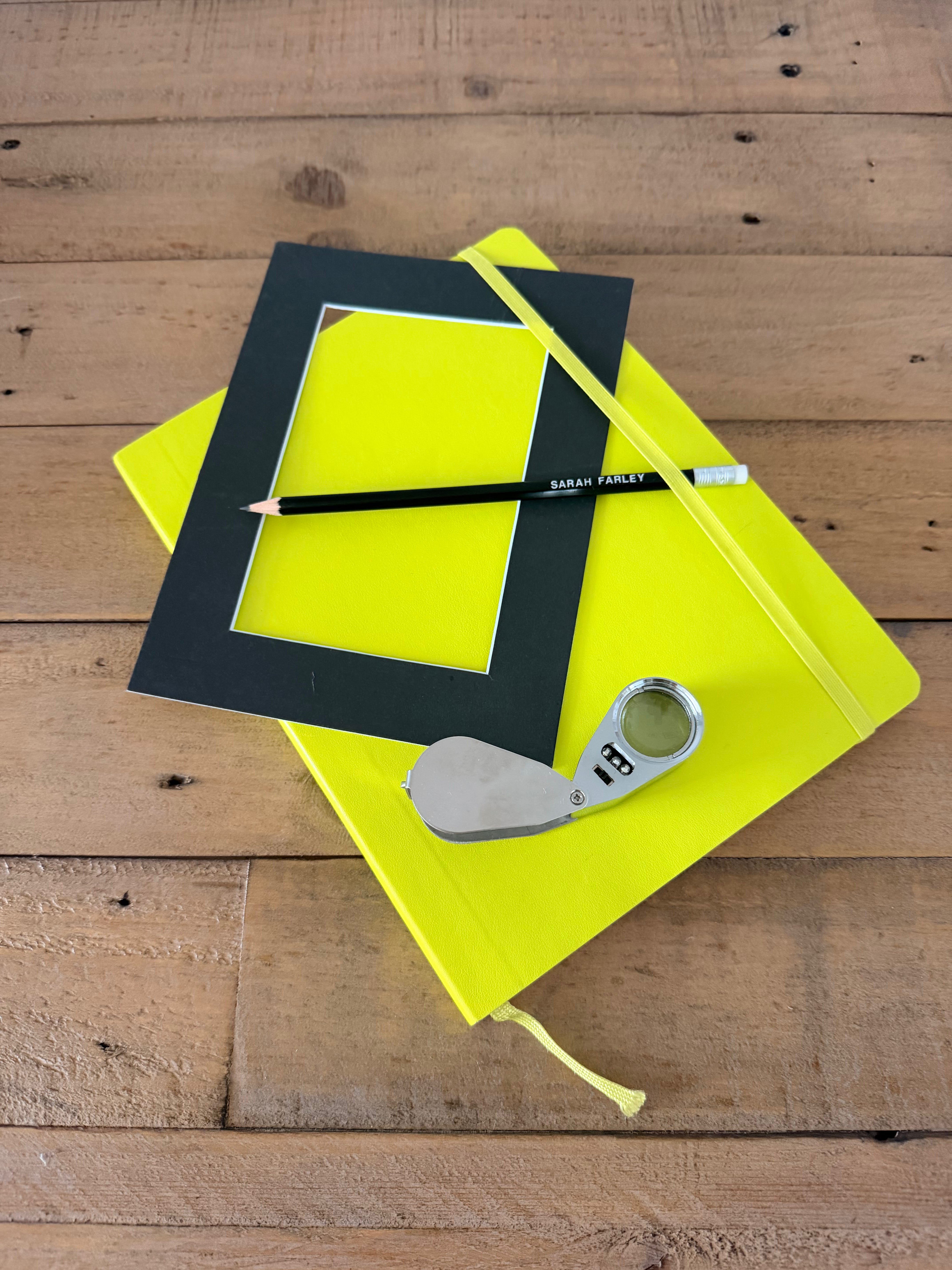
There are lots of different types of loupe, from handheld ones to ones you can wear as a headband. I have a cheap handheld one that’s small enough to fit in the palm of my hand, or tuck into my pocket.
I grab it whenever I spot something that calls for closer inspection, like the fronds on a copper beech seed that begin to appear as the blossoms fade and fall.
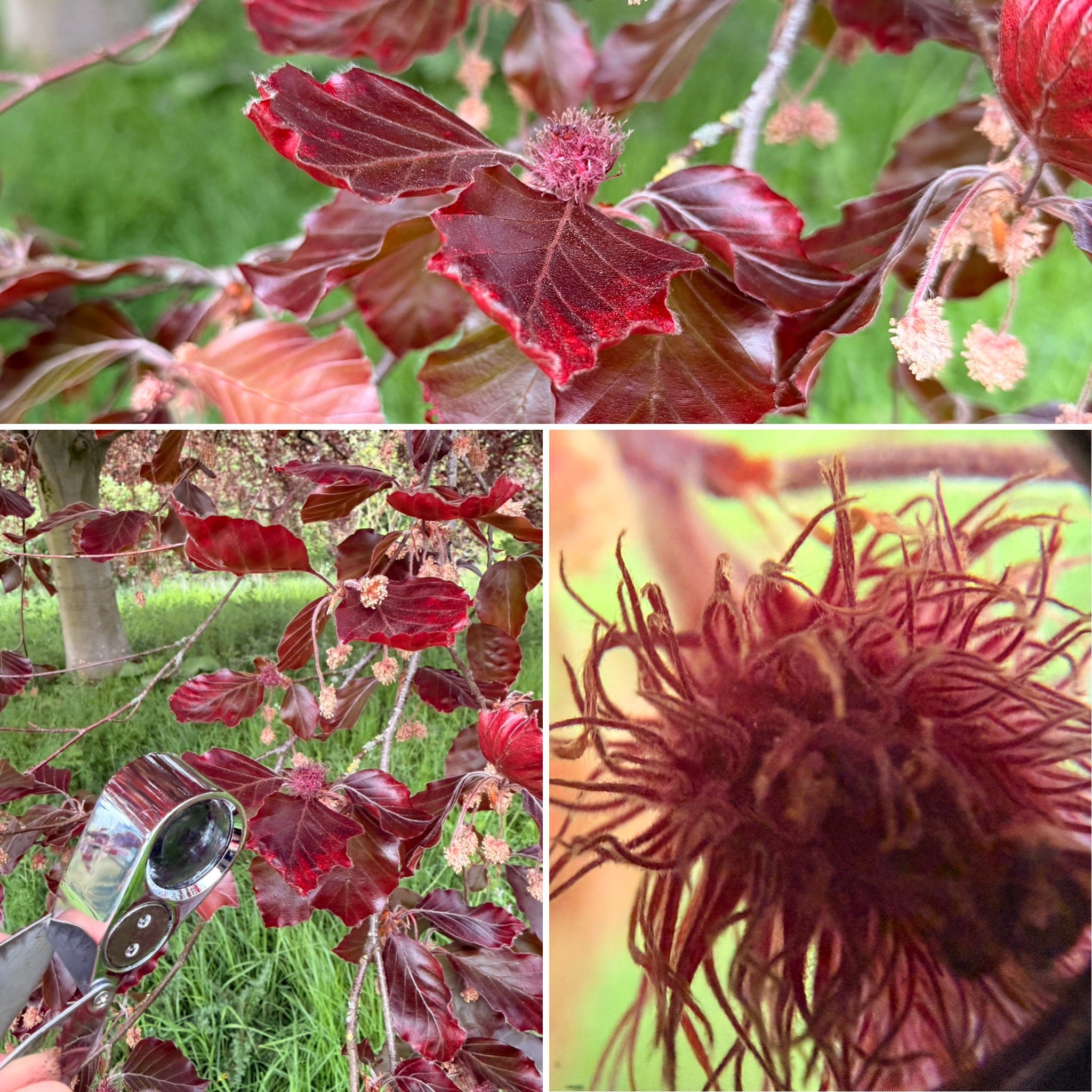
Loupes are keyholes to miniature universes, worlds and landscapes. I use mine to explore different colours and textures, following the paths carved by the veins in a leaf as they get smaller and smaller until they bring my attention to the tiny cells I wouldn’t be able see without it.
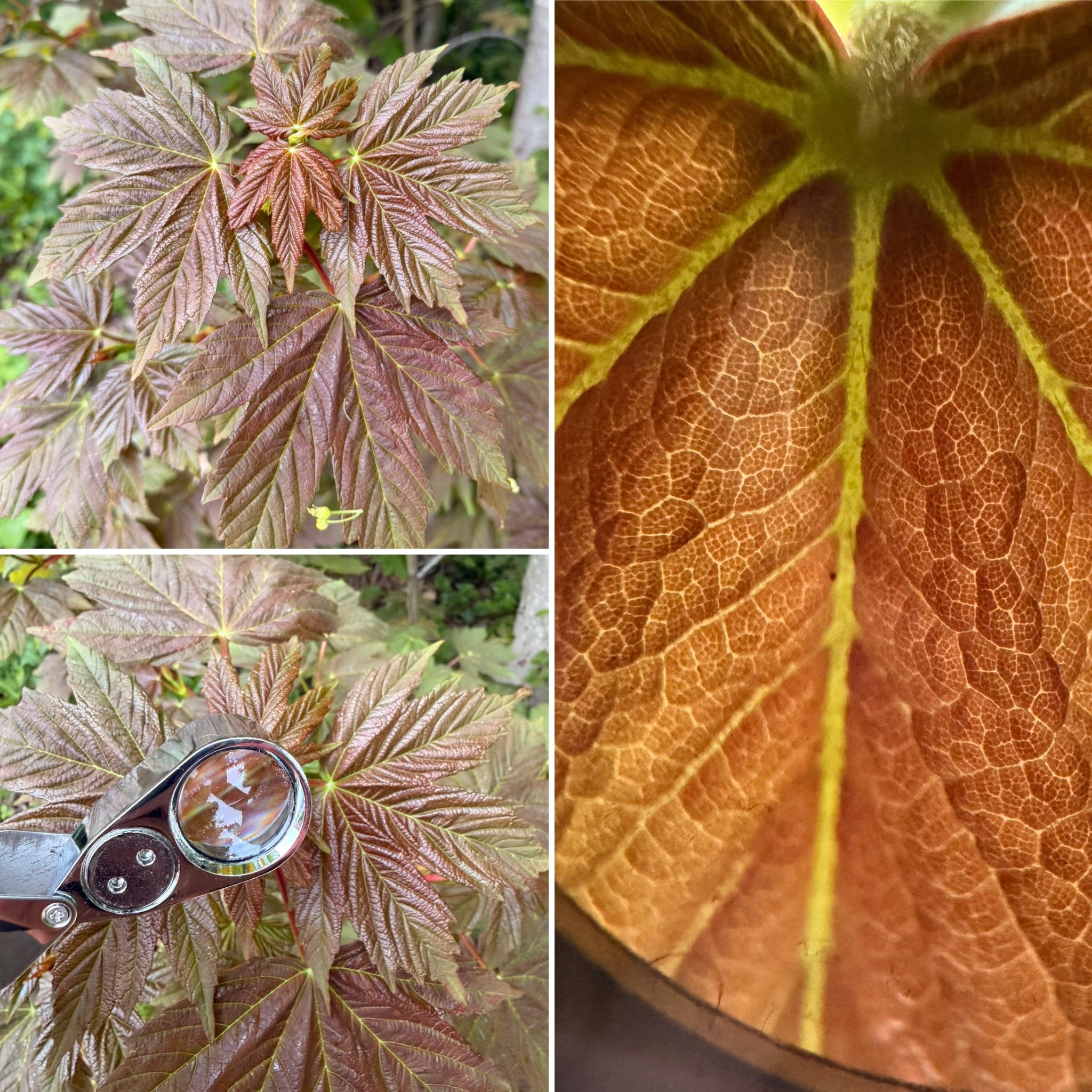
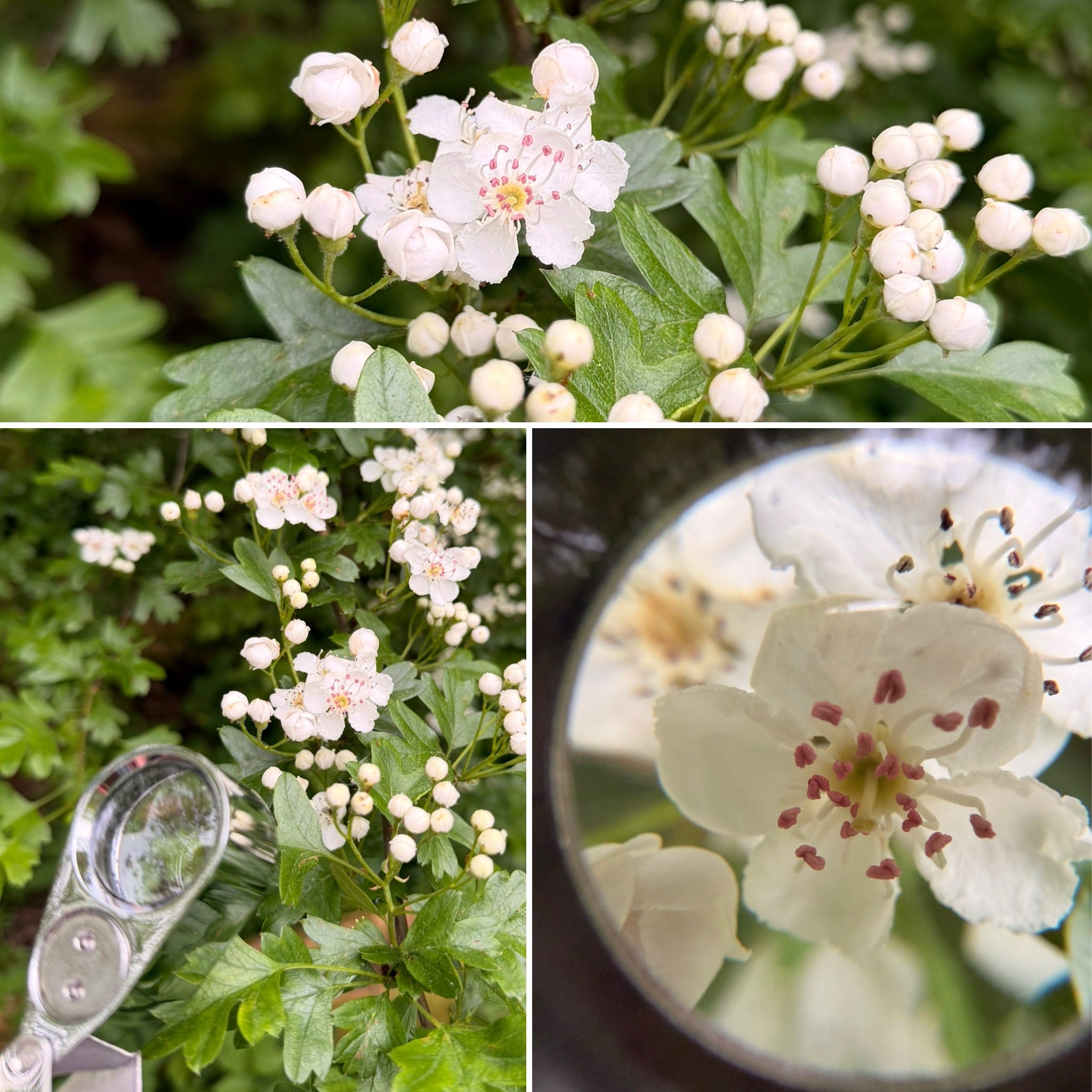
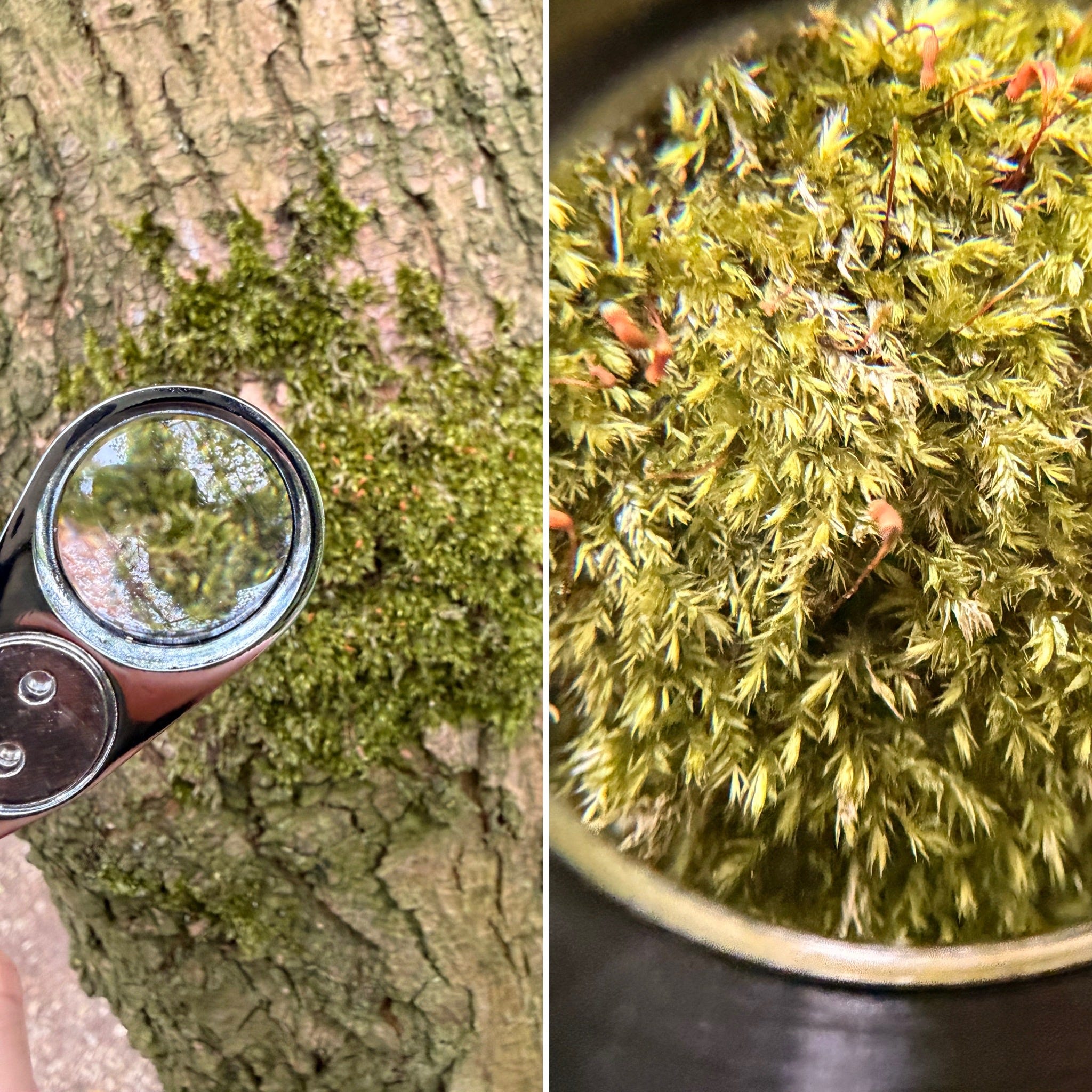
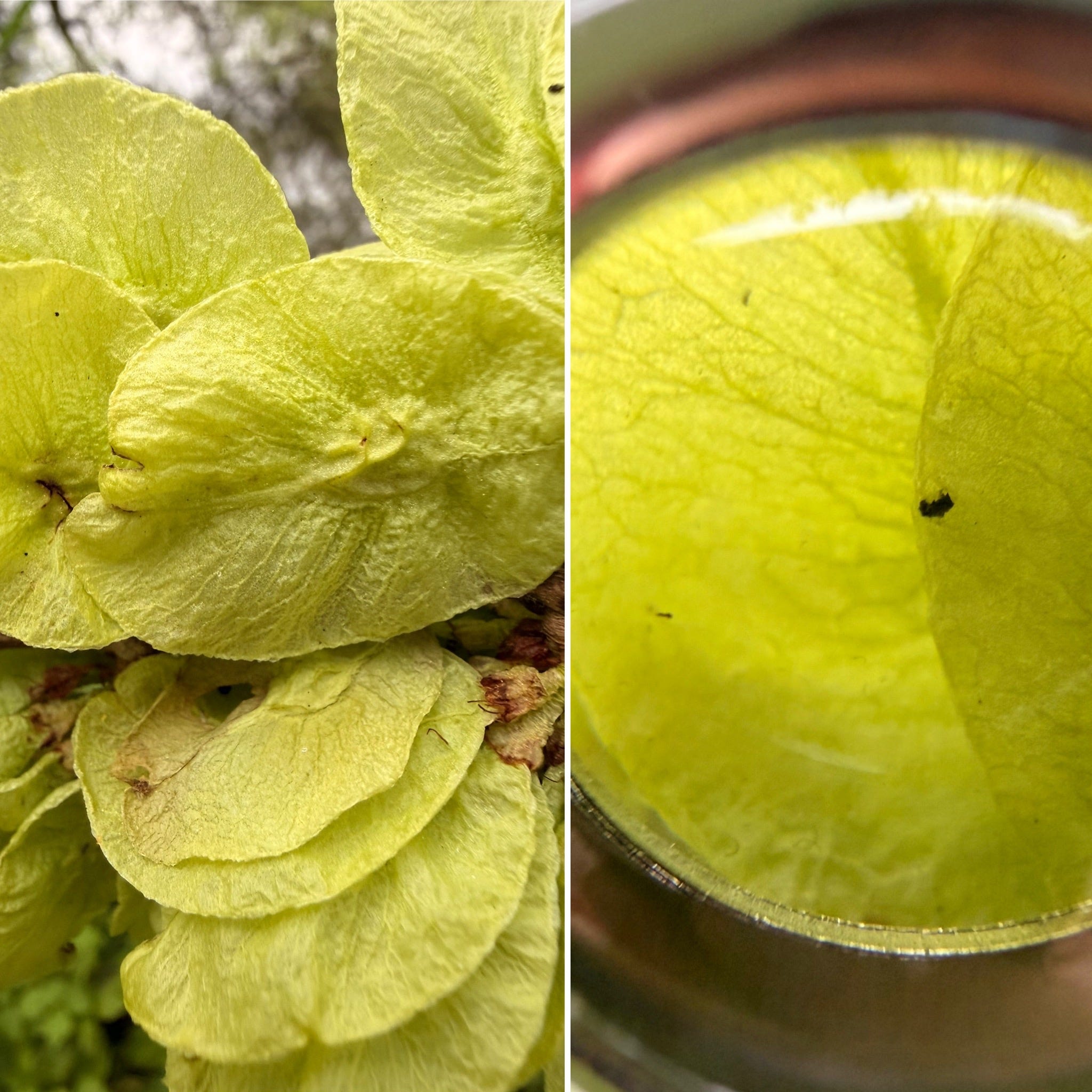
I think there’s a creative magic to be found when you look closer at the details of flowers, moss, bark, leaves, grass and seeds. I like to imagine what they resemble, like these Wych Elm seeds that, when seen super magnified through my loupe, made me think of a frog, looking back at me with its glossy eye.
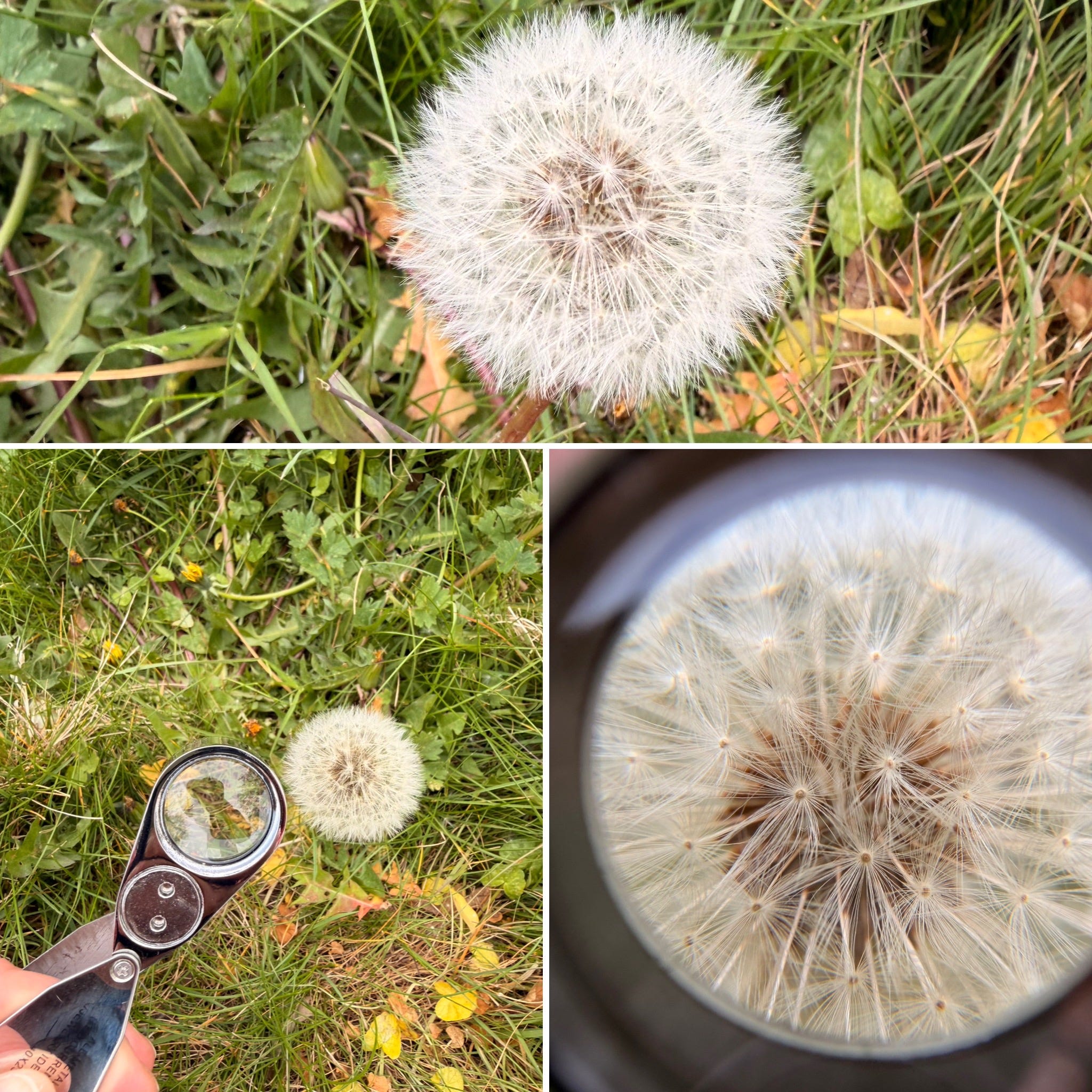
Or zooming in on a dandelion ‘clock’ and imagining that every seed marks a second. How much time does this dandelion offer? How could you make the most of that much time?
So I invite you to take a loupe on your walks and use it to sharpen your attention and focus in on the tiny beautiful details in nature. Here’s the knack to using them:
Hold the loupe to your eye as if you’re looking through a keyhole
Move your face closer to what you’re looking at until the details come into focus
You may have to practise a bit until you get the loupe in the right position against your eye, and then find the right distance between the loupe and what you’re looking at. The main thing is to keep the loupe close to your eye as you move rather than moving the loupe closer to your eye or what you’re looking at.
I also think this is a great walking theme for kids as it can be a fun way for them to learn about nature. There’s lots of free nature identification kits and resources online that you can download to help with that, like these Woodland Trust tree ID kits.
Writing
For your writing this time I invite you to sweat the small stuff. Choose something you could only see through your loupe and describe every detail you can spot. Nothing is off limits: the head of a dandelion, the tiny stem of a dandelion seed, each individual hair on that stem. Write down everything you observe until you’ve exhausted all the possibilities.
Then if you want to go further with this, pick one detail that stands out for you and write about it – in even more detail. You might focus on how a colour appears different when you zoom in on it, or the intricacies of the veins on a leaf and where they lead to. What stands out for you, and why?
I love hearing about your walks and what you find on them, so let me know what you discover by leaving a comment.
Happy walking and writing,
Sarah
More from the Writer’s Walk
If you fancy walking through a bigger loop, you might enjoy this edition on portals.

I also have reading glasses by the sofa, in my reading nook, by my bed, in my handbag, in the kitchen and even in my camping kit bag because I’m not ready to start wearing my glasses on a chain around my neck like it’s the 1950s. Nope, I’m not there yet. Honest.
I I agree with everything you say about close observation and I really like the series of photographs showing the wonders of magnification. As a child, my keen naturalist Dad equipped me with a kit which included a magnifying glass, and, as a teacher i always had similar kits available for my pupils. I was lucky to have a binocular microscope at home too. That reveals even more wonders and might be another step forward for you. My vision has deteriorated too, but I find bifocal lenses help when out walking. Something else you might consider trying, although you seem to be well organised and managing well. Thanks too, for the writing prompt. Here's one in return. Stop during a walk. Close your eyes. Turn round. Open your eyes and focus on the first thing you see. Then take that as your subject for writing. Keep writing and taking photographs. I look forward to more.